
Riba award winner
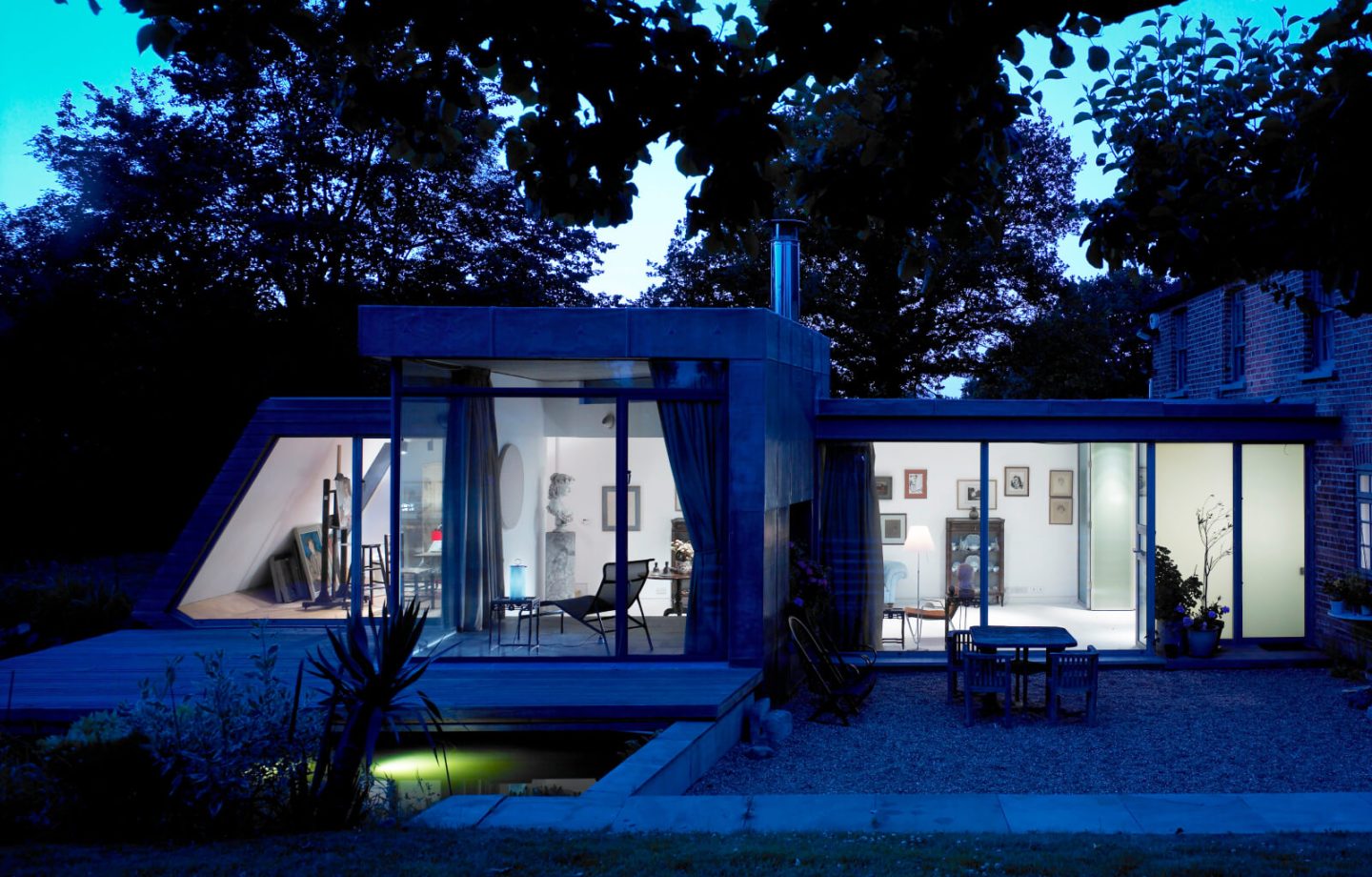
The new building is attached to pair of farm cottages and acts as a reorganising element for a house and garden. Issues of energy conservation and use of sustainable materials were addressed.The building provides a new entrance front, a living room and studio.
Timber clad elevations and large areas of glass face towards the garden achieving warming through passive solar gain. An aedicule like structure stands taller and provides stability to a surrounding timber framed carcass .
Reached by a few steps up it frames views of the garden and fields beyond.
This project involved the practice in working within a dual land scape of cultivated and wild nature.
This project received a 2005 award from the Royal Institute of British Architects (RIBA).
The Architects Journal commented: This project reconfigures the orientation of the existing Sussex farm cottages, using new-build to define a generous new entrance. Tailored to the artist-client’s needs, it has character and charm. The small and intimate interlocking volumes feel appropriate to both the site and garden.
Planning constraints:
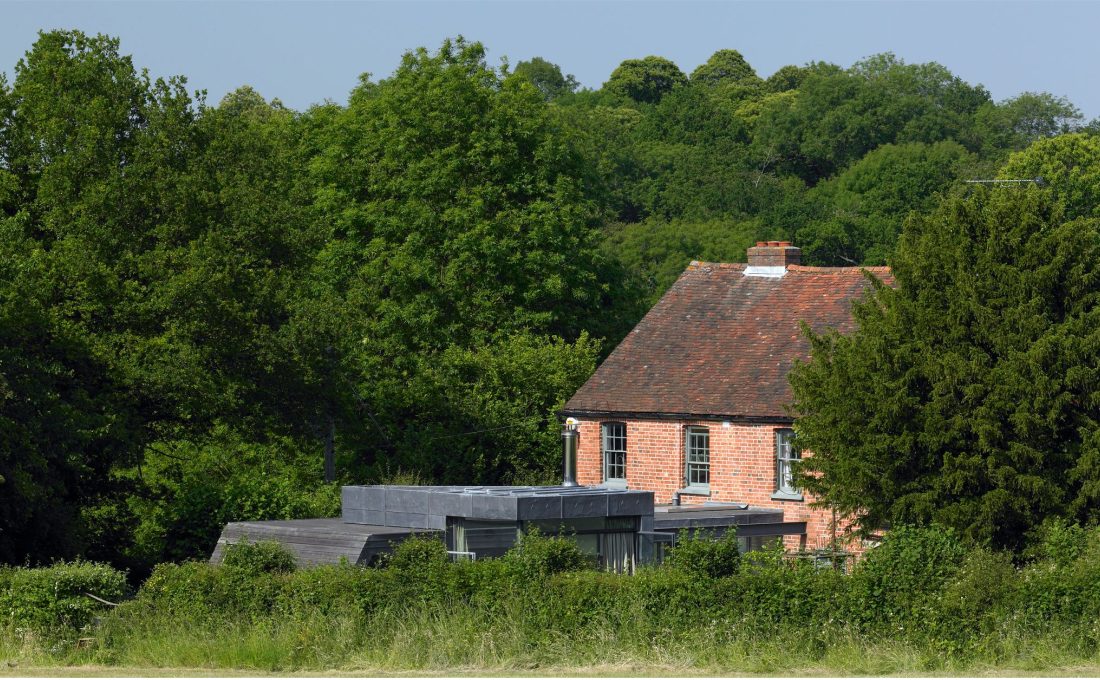
The site lies beyond the designated village development boundary, and therefore the following policies applied:
1. the proposal should not be intrusive in the landscape or detrimental to the rural setting.
2. the proposal should be of an appropriate size and scale relative to the original dwelling, and not visually dominate or otherwise adversely change the character of the existing building.
New building:
This is simple building that essentially contains two spaces, these can be subdivided into three on a daily basis, day-time and evening/night time.The first space, a new entrance for the whole house can be absorbed into the living room by folding screens.
The living room steps up with the land levels towards the rear garden. The final space a studio for the Client, a portrait painter, uses an inclined end wall with a glazed panel set within the incline for westerly light, a special requirement of the brief. This turns the end of the building into the contours of the site and is a reminder of the tradition of inclined glazing which traditionally light studio spaces. Except for a panel of glass immediately adjacent to the entrance door, there are no windows to the north entrance front, which defines the edge of a drive in.
Materials and construction:
The entrance facing wall is lined in solid Siberian larch channel siding. The channel section emphasises the overt horizontal aspirations of the new wing in contrast to the verticality of the older house.
‘A’ grade siberian larch has many of the characteristics of cedar when weathered and is practically free of knots, the visible side is essentially free of sapwood.
Through the absence of sapwood on the visible side the durability class is expected to be 2/3, making the larch siding suitable for outdoor use without the application of any preservatives.